
Agents
See all 16 →Open-source AI code-review CLI combining deterministic review pipelines with an LLM agent to produce line-level comments. Includes multi-language rules for issues such as null-pointer errors, thread safety, XSS, and SQL injection, with OpenAI- and Anthropic-compatible model support.

Ada is an AI customer service automation platform trusted by brands like Meta, Shopify, and Air Canada to autonomously resolve customer inquiries at scale. It uses a reasoning-based approach to handle complex, multi-turn conversations across web, mobile, and messaging channels. Profile coming soon — submit your review if your team uses Ada for customer support automation.

Augment Code is an AI software-development platform for large codebases. Its plans include the Cosmos software factory, CLI access, daemon and automation workflows, MCP and native tools, IDE integrations, and AI review for GitHub pull requests, backed by Augment's codebase-aware Context Engine.
ChatDev is a research project from OpenBMB (Tsinghua University) that demonstrates a virtual software company where multiple LLM agents with distinct roles — CEO, CTO, programmer, reviewer, tester — collaborate to build software from a single natural language requirement. It explores how software engineering processes can be fully automated through role-playing agents and structured communication protocols. ChatDev remains an influential research artifact and educational tool for understanding multi-agent systems.

ChatGPT Deep Research is OpenAI's autonomous research mode that browses the web, reads documents, and synthesizes multi-step analyses into comprehensive reports — often spending 5–30 minutes researching before responding. It excels at market research, competitive analysis, and literature reviews where breadth and synthesis matter more than speed. Integrated directly into ChatGPT Plus, it's the most accessible deep research tool for non-technical users.
Consensus is an AI search engine specifically designed to surface evidence from peer-reviewed scientific research, providing "Consensus Meters" that indicate how strongly the evidence supports a claim. Unlike general AI tools that may hallucinate citations, Consensus only references real papers and provides direct links to source documents. It is particularly valuable for health, nutrition, and science questions where evidence quality matters.
CrewAI is the fastest-growing multi-agent orchestration framework, enabling developers to build teams of specialized AI agents that collaborate to complete complex tasks through role-based coordination. Its intuitive Python API has made it the most popular framework for enterprise multi-agent applications, with over 25 million agent runs per month across its cloud platform. CrewAI's "Crews" model maps naturally to business workflows where different agents handle research, writing, coding, and review.

Devin is Cognition's software-engineering agent platform across Devin Cloud, CLI, and Devin Desktop, the renamed Windsurf IDE. It supports local and cloud agent fleets, integrated planning and review, browser and terminal execution, and multiple model providers including Cognition's SWE-2.

Elicit is an AI research assistant specialized in academic literature, built to help researchers find, summarize, and extract data from scientific papers. Its "Elicit Notebook" enables systematic literature reviews by searching across 200M+ papers, extracting structured data into tables, and identifying research gaps. Elicit is the gold standard for academic researchers who need rigorous, evidence-based synthesis rather than general web search.

Intercom Fin is an AI customer support agent that handles the full resolution lifecycle — understanding customer queries, searching your knowledge base, taking actions, and escalating to humans when needed. It is deeply integrated into Intercom's customer messaging platform and has achieved industry-leading resolution rates for software companies. Profile coming soon — submit your review if your team is running Fin in production.

Power BI Copilot helps Microsoft Fabric and Power BI users create reports, summarize pages, generate measures, and explore data in natural language. It is compelling for Microsoft-standardized organizations, but capacity requirements, cost, and current feature boundaries need careful review.

Qodo (formerly CodiumAI) is an AI coding agent focused on code quality, testing, and review — automatically generating meaningful unit tests and suggesting code improvements with explanations of behavior. Its Merge feature integrates into GitHub/GitLab PRs to provide intelligent code review with context from the entire codebase. Qodo is the go-to tool for teams that want AI to enforce quality standards rather than just write code.
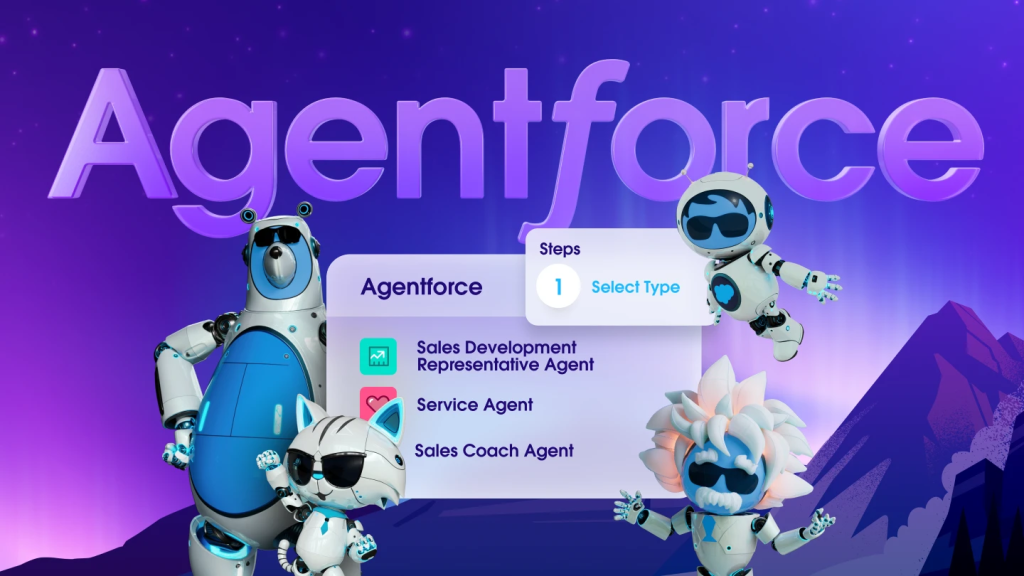
Agentforce is Salesforce's enterprise AI agent platform, enabling businesses to deploy autonomous AI agents across sales, service, marketing, and commerce workflows — fully integrated with the Salesforce data cloud and CRM. It represents Salesforce's major bet that AI agents will replace significant portions of business process automation traditionally done by rule-based tools. Profile coming soon — submit your review if you're already using Agentforce.

ServiceNow AI Agents are autonomous agents built into the Now Platform, designed to automate IT service management, HR workflows, and enterprise operations end-to-end without human involvement. They leverage ServiceNow's deep enterprise data, process definitions, and integrations to act on real business context with high accuracy. Profile coming soon — submit your review if your IT organization has deployed ServiceNow AI Agents.

Sierra is an enterprise conversational AI platform for customer service, founded by former Salesforce and Google executives with a focus on empathetic, brand-aligned customer interactions. It powers AI agents for companies like WeightWatchers, Sonos, and SiriusXM, handling complex, multi-turn customer service scenarios with high accuracy. Profile coming soon — submit your review if your enterprise has deployed Sierra agents.

Windsurf was acquired by Cognition in July 2025 and renamed Devin Desktop. The original Windsurf listing is retained for historical reviews and comparisons; current users should evaluate Devin Desktop, which combines the Windsurf IDE with local and cloud agent management.